
Podcast summary
Are rural raccoons becoming domesticated?
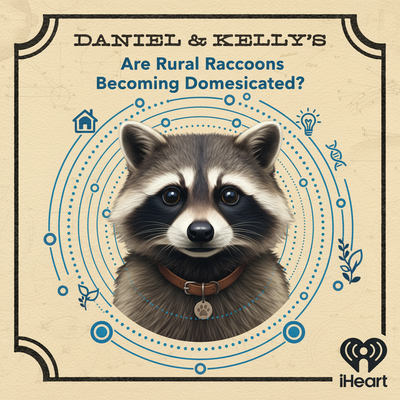

Domestication is selection plus proximity, not binary
Domestication is often modeled as a spectrum: first animals benefit from living near humans, then humans intentionally breed for traits. “Domestication syndrome” is debated because trait packages vary and mechanisms aren’t fully pinned down.
Domestication markers can mislead without baselines
Even if traits co-occur (e.g., shorter snouts, floppy ears), they can stem from multiple pathways. Treating markers as proof risks a false “signal of domestication,” like a symptom without disease certainty.
Urban raccoons show slight snout-shift, not proof
A citizen-science study found urban raccoons average ~3.6% shorter snouts and climate-driven differences, but relied on noisy image measurements and small rural samples with only moderate inter-rater reliability—so “early domestication” remains plausible, not established.
Get smarter in 10 seconds
Koficast is a free newsletter delivering clear, high-signal takeaways like these from the best podcasts, picked for you.
Zero spam. Emails auto-pause if you’re not opening.