
Podcast summary
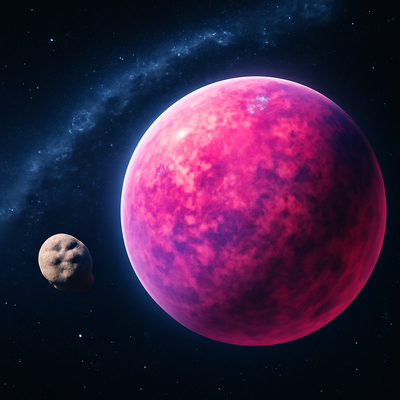
The Pink, Salty Exoplanet — Could Humanity Travel to the Galaxy’s Most Colorful World?

Gravity limits drive Phobos, Swift, and clues
Across three stories, unstable or poorly controlled orbits dominate: Phobos’ weak gravity and Roche-limit fate, Swift’s atmospheric decay, and exoplanet classification depend on measurable spectra, not assumptions.
Phobos’ craters imply internal density structure
If Phobos is pumice-like or a “rubber pile,” tidal forces would tend to crumble it; sharp craters and a dense region under Stickney instead argue for localized densification zones.
Diagnosing salt clouds requires cloud-aware spectra
Webb Telescope spectra looked contradictory until models included different atmospheric cloud types; the best fit pointed to salt clouds, and temperature makes pure vapor less likely.
Get smarter in 10 seconds
Koficast is a free newsletter delivering clear, high-signal takeaways like these from the best podcasts, picked for you.
Zero spam. Emails auto-pause if you’re not opening.